Business Name: BeeHive Homes of Goshen
Address: 12336 W Hwy 42, Goshen, KY 40026
Phone: (502) 694-3888
BeeHive Homes of Goshen
We are an Assisted Living Home with loving caregivers 24/7. Located in beautiful Oldham County, just 5 miles from the Gene Snyder. Our home is safe and small. Locally owned and operated. One monthly price includes 3 meals, snacks, medication reminders, assistance with dressing, showering, toileting, housekeeping, laundry, emergency call system, cable TV, individual and group activities. No level of care increases. See our Facebook Page.
12336 W Hwy 42, Goshen, KY 40026
Business Hours
Monday thru Sunday: 7:00am to 7:00pm
Facebook: https://www.facebook.com/beehivehomesofgoshen
The choice to move a parent into assisted living is seldom simple. Households tend to come to it after a fall, a medical facility stay, growing caregiver burnout, or a sneaking sense that something is no longer safe at home. By the time the discussion starts, feelings are already high.
What frequently gets lost in the seriousness is the person at the center of all of it. Your parent is not a task to be handled. They are the one whose life will alter the most, and their experience of the process will shape how well they adjust.
Involving your parent thoughtfully is not simply kind. It respite care is useful. People who feel heard and appreciated tend to adapt better, stay engaged longer, and accept assist more willingly. I have actually seen the opposite too: families that make every choice for their parent, hurry the move, then invest months trying to repair the damage to trust.
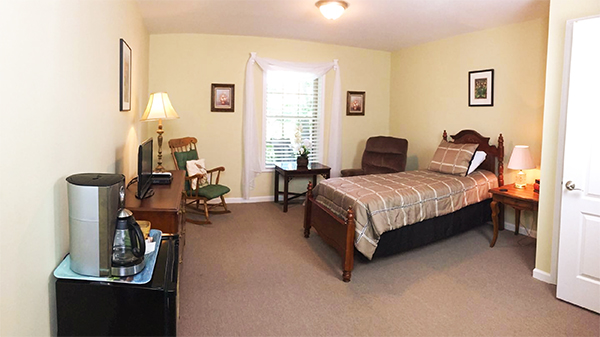
This guide focuses on how to bring your parent into the procedure in a way that secures their dignity while still dealing with genuine safety and care needs.
Why your parent's participation matters
When older adults feel stripped of control, you typically see more resistance, anxiety, or withdrawal. I have actually seen capable parents become suddenly "challenging" when every choice is made around them instead of with them. The behavior is usually a demonstration, not a personality change.
There are several concrete reasons to include them:
They know their own priorities more plainly than anyone else. You may focus on medical assistance and fall avoidance. They might care more about being near buddies, having space for their piano, or having the ability to being in a garden every day. A "ideal" assisted living apartment that ignores those top priorities can still seem like a prison.
They notice fit and chemistry that families miss out on. Personnel can look outstanding on paper and sound reassuring on tours. Your parent is the one who needs to live there. I have seen elders pick up quickly on whether locals appear genuinely engaged or just parked in front of a television. Their impulse about whether a location feels warm or transactional deserves weight.
They are more likely to accept care later. When somebody participates in the search, chooses their room, and satisfies staff ahead of time, the relocation feels less like exile and more like a planned shift. That alone can soften the psychological landing.
Finally, involving your parent is fundamentally about respect. Even when cognitive decrease is present, there are frequently significant ways to invite choices within safe limits. You are not just choosing a senior care setting, you are modeling how your household deals with vulnerability.
Starting before you "have" to
The most effective relocations into assisted living typically began as discussions years previously, not frantic decisions after a crisis.
Ideally, you raise the subject while your parent is still fairly independent. You might say, "If there comes a time when home is not the best option, what type of places would you think about? What would matter most to you?" The objective is not to persuade them to move right away, however to plant the concept that this is a shared job which they have a voice.
When households postpone the conversation up until after a fall or healthcare facility stay, two issues appear at once. Emotions run hot, and alternatives narrow. Rehabilitation timelines, discharge pressures, and insurance coverage limitations might press you to pick rapidly. Under that tension, it is easy to default to "we just have to choose for them."
If you are already in crisis, you can not unwind time, but you can still slow the emotional temperature. Acknowledge aloud that the scenario is immediate, yet you still desire them included. Even simple gestures, like sitting together with a printed list of close-by neighborhoods and circling a couple of they would be willing to visit, can bring back some sense of control.
Naming the emotions in the room
I have hardly ever met an older grownup who is neutral about moving into assisted living. Typical emotions include worry, grief, embarassment, anger, and often relief that somebody finally noticed how difficult things have become.
Adult kids bring their own load: guilt, anxiety, resentment from years of caregiving, or unresolved family history. If no one names these sensations, they leak into the process as battles over details.
You do not need a household therapist to address this, though one can certainly help. What you do need are a couple of honest declarations that make it safer for your parent to speak.
You may state:
"I feel torn. I desire you safe, but I likewise do not desire you to feel pressed. Can we talk about both parts?"
Or, "I envision this may seem like losing your self-reliance. What worries you most about that?"
You are not guaranteeing to repair every feeling. You are signifying that their emotions are valid, not challenges to steamroll.
Avoid framing assisted living as penalty or as evidence that they "can't manage." Instead, talk in regards to altering requirements, energy, and security. Lots of older grownups can accept that bodies and endurance modification gradually. They bristle at the concept that they are being treated like children.
Clarifying needs before you visit any community
One typical mistake is exploring communities without a clear sense of what your parent actually needs, both clinically and emotionally. You end up dazzled by the chandelier in the lobby and forget to ask whether anybody will assist your dad to the restroom at night.
Before you book trips, sit with your parent and sketch three overlapping photos: everyday function, health and wellness, and quality of life.
Daily function consists of concrete tasks such as bathing, dressing, toileting, meal preparation, mobility, and medication management. Where do they reliably manage alone, and where do they battle or avoid?
Health and safety includes diagnoses, fall history, roaming risk, incontinence, pain problems, and cognitive status. A cardiology client who tires easily has different requirements from someone with Parkinson's illness or early dementia.
Quality of life is frequently the most neglected. Ask what they delight in now. Checking out. Church. Card games. Watching birds. Chatting in the hallway. Heading out to lunch. Also ask what they miss out on doing but might potentially resume with more support. A great assisted living neighborhood can support physical security and still starve the soul if it does not align with their interests.
Raise respite care options too. For many households, setting up a brief remain in assisted living as respite care can be a low threat way to "try out" a neighborhood. Your parent might agree quicker to "a month while I recuperate from this surgical treatment" than to a long-term relocation. That experience can decrease worry and help them make a more educated long term choice.
Choosing language that protects dignity
Words form how your parent experiences this transition. I have seen resistance soften just from changing a few phrases.
Comparing 2 techniques reveals the distinction:
"We can't leave you alone any longer, it isn't safe" frequently lands as criticism, suggesting incompetence.
"We are fretted about you being by yourself if something happens, and we want a strategy that keeps you safe without you feeling caught" acknowledges issue without eliminating their agency.
Avoid language that frames assisted living as "a home" in opposition to their existing home. Numerous homeowners choose to think of it as "my house" or "my place" within a senior care neighborhood. Ask your parent what words feel acceptable to them and try to stick with those.
When discussing choices, phrase it as a joint search. "Let's look at a few places and see if any feel best to you" is extremely various from "We have actually discovered a place for you."
Planning visits together
Tours are where numerous older adults either begin to accept the concept, or closed down entirely. How you include them here matters.
Before you begin checking out, settle on the function your parent wishes to play. Some more than happy to stroll through every building, ask questions, and compare notes. Others feel easily overwhelmed and choose much shorter visits, or to see only a couple of leading contenders.
A brief shared checklist can make visits feel more structured rather than like aimless wanderings through glossy halls.
List 1: Easy things to try to find on each visit
Do residents seem engaged, or primarily sitting alone or in front of a screen? Are staff interacting with locals by name and with patience? Are corridors, bathrooms, and typical areas tidy but also resided in, not simply staged? Can your parent imagine themselves in fact hanging out in the shared spaces? How does your parent feel leaving the structure: lighter, much heavier, or indifferent?Encourage your parent to speak about feelings as much as realities. I have actually had citizens state things like, "The people appeared nice but it felt like a hotel, not my life," or, "It was smaller, and that made me feel less lost."
After each visit, debrief while it is fresh. Have your parent rank the location informally: "never," "maybe," or "I could see this." Regard the "never" unless there is a very strong security or monetary factor not to. Overriding a clear "never" interacts that their impressions are disposable.
Understanding levels of care and what they imply for autonomy
Assisted living, memory care, proficient nursing, and independent living often get tossed around interchangeably in table talk, however they stand out layers within the senior care spectrum.
For many older grownups, assisted living inhabits a middle ground. It provides assist with everyday activities, meals, 24 hour personnel, and typically medication assistance, without the more medicalized setting of a nursing home. Within assisted living itself, there is typically a range of support, from light assistance to almost complete hands on care.
Discuss with your parent how much aid they are willing to accept, both now and as requires modification. Some choose a place that can increase care levels with time so they do not need to move again. Others focus on smaller, more homelike settings, even if that indicates a future relocation if health changes.
Respite care ends up being essential here too. Short-term remains in a community that also offers permanent assisted living can work as a bridge after a hospitalization, or as a test of whether the environment fits their style. Your parent's reaction to a respite stay is important data: did they feel lonesome, supported, bored, or happily relieved?
Inviting your parent into the useful questions
Families frequently assume they should deal with the "tough" information such as contracts, costs, and care plans independently. While monetary specifics might not constantly be appropriate to discuss in depth, there are many useful choices where your parent's voice is crucial.
Tour personnel will explain care plans, medication policies, checking out hours, transport, and meal strategies. Rather of quietly taking in the details, turn to your parent and ask, "How would that work for you?" or "Does that schedule fit how you like to live?"
Ask what trade offs they want to make. A community more detailed to family may have fewer features. One with a spectacular gym might have less faith based services or weaker transport options. Some seniors would happily give up a movie theater for a stronger rehab program or better food. Others are willing to commute further for the right social environment.
Involving them in these trade offs enhances that this is their life, not simply your logistical challenge.
Watching for red flags together
A glossy pamphlet can hide a lot. Inviting your parent to observe red flags teaches them to promote on their own, even after you have actually gone home.
List 2: Warning your parent and you can watch for
Staff who hurry, prevent eye contact, or seem inflamed by locals' questions. Residents who look regularly unkempt, not just delicately dressed. Strong smells of urine or heavy cleaning chemicals in many areas. Activities posted on a calendar but not really occurring when you visit. Defensive or unclear responses when you inquire about staff turnover, training, or event response.Encourage your parent to ask at least one question on every tour. It might be simple, such as, "What is breakfast like here?" or "Can I bring my own chair?" The way staff respond to their concerns is typically more telling than the content of the answer.
If your parent uses a walker or wheelchair, observe how spaces feel for them in real usage, not simply theoretically. Enjoy their body language. Do they seem tense on ramps, confused by layout, reluctant in congested hallways?
When your parent says "I am not all set"
Resistance to assisted living typically sounds like stubbornness however is generally layered.
Sometimes, "I am not prepared" indicates "I hesitate I will be forgotten when I move." Other times it means "I do not see myself as that old yet" or "I do not want to spend money on myself."
Ask open, interest based concerns. "What would require to be real for this to seem like the correct time, or at least not the incorrect one?" or "What worries you most about moving? What worries you most about staying?"
Share your own observations without exaggeration. "In the past six months, you have fallen two times and ended up in the emergency clinic. That makes me scared. I would like to discover a way for you to feel much safer without losing what matters to you."
There will be cases where health and wellness needs are so immediate that waiting is not a choice. When that happens, stay truthful. "If it were only about choice, I would desire you to choose totally on your own schedule. Right now the hospital is telling us that going home alone would be hazardous, so we need to find something that works, and I desire as much of your input as we can collect."
That difference between preference and security respects their autonomy while being clear about reality.
When cognitive decline makes complex choice
If your parent has significant dementia, significant participation looks various, but it is not absent.
People with moderate dementia might not comprehend contracts or long term financial ramifications, but they can frequently still indicate comfort or discomfort, like or dislike, and immediate preferences. In those cases, households can narrow choices in advance using objective requirements, then involve the parent in picking amongst a couple of that all satisfy security and care needs.
Focus their participation on what affects daily experience: room design, familiar furniture, which quilt comes, whether the window deals with trees or a parking area, whether they prefer a quieter corridor or a busier one.
Use validation instead of argument when they reveal worry or confusion. If they say, "I wish to go home," and home is no longer safe, you do not need to contradict the sensation to maintain the choice. You can say, "You miss your home. You invested many excellent years there. Let us make this room feel as similar to you as we can."
Check whether the community has strong memory care support, qualified personnel, and versatile routines. An individual with dementia might not articulate these requirements clearly, however you will see the results later on in their behavior and comfort.
Managing siblings and household dynamics
One silent challenge to involving your parent meaningfully is conflict amongst adult children. If siblings argue in front of a parent about assisted living, the parent frequently retreats or aligns with whichever kid seems most protective, not necessarily the one with the most sensible plan.
Try to align with brother or sisters beforehand, a minimum of on essentials: safety thresholds, monetary limitations, and rough timelines. Present a primarily united front that still leaves space for your parent's input. If complete agreement is difficult, at least accept keep the fiercest disputes away from your parent's earshot.
Include your parent in family conferences when choices directly shape their life, such as picking a specific neighborhood or choosing whether to try respite care initially. When disputes have to do with behind the scenes logistics, such as who handles the documents, protect them from the noise.
Transparency helps. Inform your parent who holds power of lawyer, who is signing contracts, and how expenses will be paid. Even if they are no longer dealing with these jobs, understanding the plan can reduce anxiety.
Making the room "theirs"
Once you have actually picked a neighborhood together, the next action is turning a void into something recognizable. The more involved your parent is in this, the easier the psychological transition tends to be.
Walk through their present home together and ask what items seem like anchors. For some it is a specific armchair, a bedside lamp, framed family photos, or a preferred set of meals. For others, it may be religious items, a sewing basket, or a stack of gardening magazines.
Invite them to help decide where those products enter the brand-new space. Simple questions such as "Which wall should your pictures go on?" or "Do you want your chair by the window or by the door?" give them back small but meaningful control.
If possible, set up the space totally before they arrive for relocation in. Strolling into a place that currently looks familiar, with their quilt on the bed and books on the shelf, feels different from entering a bare unit. It interacts, "You live here," rather of, "You are being put here."
Encourage the staff to call them by their preferred name from the first day. Share a brief "about me" sheet with their background, pastimes, former profession, and everyday routines. This helps staff associate with them as an individual, not a medical diagnosis, and it develops connection from their previous life.
Staying included after the move
Involvement does not end on move in day. In fact, the weeks that follow are frequently the hardest. Even when a parent has actually been part of every choice, the first nights in a brand-new location can feel disorienting and lonely.
Visit, call, or video chat frequently at first, according to what your parent prefers. Some like the security of daily calls. Others feel more settled with a foreseeable pattern, such as visits every Sunday and Wednesday. Ask what would help them feel connected without being smothered.
Invite their viewpoints about how the care strategy is working. "How are you agreeing the staff?" "Are you getting to meals on time?" "Exists anything you do not like that we should speak to them about?" Treat these routine check ins as an extension of the shared decision making process, not a postscript.
If concerns occur, include your parent in addressing them. Rather of calling the director behind their back, say, "You pointed out that the nighttime staff are slow to address your bell. Would you like me to come to a care conference with you and bring that up?" Even if they choose that you handle it alone, the act of asking respects their ownership.
As time goes on and requires boost, circle back to them before major modifications, such as moving from assisted living to a more advanced level of elderly care or memory care. Even if the choice feels clinically clear, you can still say, "Your health has actually altered and the nurses believe you would be much safer with more assistance. Let us look at what that would resemble and decide together how to do this as gently as possible."

The heart of the matter
Choosing assisted living is not almost structures, layout, or care packages. It is about identity, history, safety, money, and love, all tangled together.
Involving your parent throughout the process implies accepting some additional intricacy. It might take longer. You might tour more neighborhoods. You may listen to more fears. Yet you are likewise developing a bridge of trust that will support both of you in the years ahead.
Assisted living, respite care, and other senior care alternatives can be terrific tools. They are not, by themselves, a warranty of self-respect. Dignity originates from how decisions are made, how voices are heard, and how families appear for one another when life ends up being fragile.
If you keep that frame in mind, the useful actions of browsing, going to, and picking start to feel less like a series of battles and more like a shared job: finding a location where your parent can be looked after without being erased.
BeeHive Homes of Goshen provides assisted living care
BeeHive Homes of Goshen provides memory care services
BeeHive Homes of Goshen provides respite care services
BeeHive Homes of Goshen supports assistance with bathing and grooming
BeeHive Homes of Goshen offers private bedrooms with private bathrooms
BeeHive Homes of Goshen provides medication monitoring and documentation
BeeHive Homes of Goshen serves dietitian-approved meals
BeeHive Homes of Goshen provides housekeeping services
BeeHive Homes of Goshen provides laundry services
BeeHive Homes of Goshen offers community dining and social engagement activities
BeeHive Homes of Goshen features life enrichment activities
BeeHive Homes of Goshen supports personal care assistance during meals and daily routines
BeeHive Homes of Goshen promotes frequent physical and mental exercise opportunities
BeeHive Homes of Goshen provides a home-like residential environment
BeeHive Homes of Goshen creates customized care plans as residents’ needs change
BeeHive Homes of Goshen assesses individual resident care needs
BeeHive Homes of Goshen accepts private pay and long-term care insurance
BeeHive Homes of Goshen assists qualified veterans with Aid and Attendance benefits
BeeHive Homes of Goshen encourages meaningful resident-to-staff relationships
BeeHive Homes of Goshen delivers compassionate, attentive senior care focused on dignity and comfort
BeeHive Homes of Goshen has a phone number of (502) 694-3888
BeeHive Homes of Goshen has an address of 12336 W Hwy 42, Goshen, KY 40026
BeeHive Homes of Goshen has a website https://beehivehomes.com/locations/goshen/
BeeHive Homes of Goshen has Google Maps listing https://maps.app.goo.gl/UqAUbipJaRAW2W767
BeeHive Homes of Goshen has Facebook page https://www.facebook.com/beehivehomesofgoshen
BeeHive Homes of Goshen won Top Assisted Living Homes 2025
BeeHive Homes of Goshen earned Best Customer Service Award 2024
BeeHive Homes of Goshen placed 1st for Senior Living Communities 2025
People Also Ask about BeeHive Homes of Goshen
What does assisted living cost at BeeHive Homes of Goshen, KY?
Monthly rates at BeeHive Homes of Goshen are based on the size of the private room selected and the level of care needed. Each resident receives a personalized assessment to ensure pricing accurately reflects their care needs. Families appreciate our clear, transparent approach to assisted living costs, with no hidden fees or surprise charges
Can residents live at BeeHive Homes for the rest of their lives?
In many cases, yes. BeeHive Homes of Goshen is designed to support residents as their needs change over time. As long as care needs can be safely met without requiring 24-hour skilled nursing, residents may remain in our home. Our goal is to provide continuity, comfort, and peace of mind whenever possible
How does medical care work for assisted living and respite care residents?
Residents at BeeHive Homes of Goshen may continue seeing their existing physicians and medical providers. We also work closely with trusted medical organizations in the Louisville area that can provide services directly in the home when needed. This flexibility allows residents to receive care without unnecessary disruption
What are the visiting hours at BeeHive Homes of Goshen?
Visiting hours are flexible and designed to accommodate both residents and their families. We encourage regular visits and family involvement, while also respecting residents’ daily routines and rest times. Visits are welcome—just not too early in the morning or too late in the evening
Are couples able to live together at BeeHive Homes of Goshen?
Yes. BeeHive Homes of Goshen offers select private rooms that can accommodate couples, depending on availability and care needs. Couples appreciate the opportunity to remain together while receiving the support they need. Please contact us to discuss current availability and options
Where is BeeHive Homes of Goshen located?
BeeHive Homes of Goshen is conveniently located at 12336 W Hwy 42, Goshen, KY 40026. You can easily find directions on Google Maps or call at (502) 694-3888 Monday through Sunday 7:00am to 7:00pm
How can I contact BeeHive Homes of Goshen?
You can contact BeeHive Homes of Goshen by phone at: (502) 694-3888, visit their website at https://beehivehomes.com/locations/goshen/, or connect on social media via Facebook
Conveniently located near Beehive Homes of Goshen Cinemark Tinseltown Louisville a great movie theater with full food & drink menu. Catch a movie and enjoy some great food while you wait.